
WAF, TLS hardening, and domain controls at your public edge.Edge Security
An exposure at the edge reaches everything behind it before it reaches your infrastructure. FEDLIN engineers and maintains the controls that close those paths: WAF, TLS hardening, domain trust, and access controls. Cloudflare by default, or native controls inside Azure, AWS, and GCP for organizations already invested in those environments.
For teams whose public edge is in scope for a SOC 2 audit, a customer security review, or a compliance mandate. Delivered as a managed tier with a formal change workflow and audit trail; controls map to SOC 2 CC6.1/CC6.6 and NIST 800-53 SC/SI, with evidence artifacts produced at implementation time.
Engineered by Jeremiah Coakley, Principal Security Architect
What's your priority?
Where this fits
The boundary everything is behind.
Edge Security is the managed layer that keeps every public-facing asset patched, monitored, and audit-ready: web apps, APIs, admin portals, workloads, and the email domain your customers trust. It stands alone or folds into any managed estate engagement, so whatever you run behind the edge stays covered.
See all services →See the managed tiers →Have a backlog of edge findings to close? →
Engagements
Two ways to secure the boundary
Every engagement secures the same thing: the domain and edge boundary where traffic, email, and users meet the internet. The difference is who owns it going forward. FEDLIN either runs that boundary for you as a managed subscription, or hardens and validates it inside your own tenant as a one-time engagement.
Managed Edge
Ongoing · we own the boundaryFEDLIN runs your DNS and edge inside a FEDLIN-managed Cloudflare environment; in-scope updates are included and tracked through a formal change workflow with an audit trail. A one-time onboarding brings the boundary under management before the subscription begins. The tier scales with the number of domains and your posture, confirmed on a scoping call.
Foundation
DNS and edge ownership, handled correctly.
The baseline
- →DNS and edge boundary management
- →TLS and security-headers baseline
- →Email-trust sanity check (SPF/DKIM/DMARC presence)
- →Validation after every change
- →Formal change workflow with an audit trail
Best for: Small teams that want the boundary owned and maintained.
Protection
RecommendedActive perimeter defense on top of the baseline.
Everything in Foundation, plus
- →WAF baseline configuration
- →Bot and abuse mitigation
- →Production-safe validation emphasis
Best for: Revenue-generating sites and applications.
Assurance
Governance and evidence for teams under review.
Everything in Protection, plus
- →Quarterly governance review: drift check against baseline
- →Risk memo, vendor-review and board-ready
- →Prioritized remediation action list
- →One remediation batch per quarter
Best for: VC-backed teams, GovCon contractors, and vendor-review pressure.
One-Time Hardening
Your tenant · we harden and hand backFor teams that cannot delegate DNS and edge ownership, FEDLIN hardens and validates the boundary inside your own Cloudflare tenant as a defined engagement with clean handoff. Pick the controls you need; each is scoped on a call and can stand alone or combine.
Cloudflare Full Setup
- →DNS review and cleanup
- →TLS configuration
- →Security headers deployment
- →WAF baseline configuration
- →Basic validation and documentation
- →Additional domains and environments scoped per engagement
Email Domain Trust Baseline
Per domain- →SPF/DKIM validation and correction
- →DMARC deployment
- →Sender alignment validation
- →Documentation and rollout guidance
Email Domain Trust: Enforcement Upgrade
Add-on to Email Domain Trust Baseline- →Quarantine/reject staging
- →Alignment refinement
- →Rollout monitoring and tuning
Application Security Policy Engineering
Per app- →Security header optimization
- →TLS posture refinement
- →CSP report-only deployment
- →Validation and rollout guidance
- →Optional: CSP Enforcement Upgrade
- →Optional: Terraform Self-Healing Configuration
WAF & Bot Mitigation
- →WAF configuration and ruleset tuning
- →Bot/abuse mitigation controls
- →Rate limiting and advanced security rules
- →Verification and documentation
- →High-abuse environments scoped separately
WAF Tuning Retainer
Ongoing · add-on to WAF & Bot Mitigation- →Ongoing WAF rule tuning and adjustments
- →Threat pattern review and mitigation updates
- →Monthly review cadence
Quarterly Governance
- →Configuration drift review
- →Risk memo
- →Minor remediation batch
- →Prioritized remediation action list
How it's scoped
The size of the work tracks a few things: the number of domains and hostnames (WAF, headers, and DMARC/SPF/DKIM all scale here), the number of API endpoints, your current posture, and how complex the stack is. We confirm scope on a short call and give you a fixed number before anything starts.
Platform
Cloudflare by default. Native controls where you already are.
Most engagements run on Cloudflare: the widest global WAF network, post-quantum key exchange at the edge, and built-in DDoS absorption. For organizations already invested in Azure, AWS, or GCP, FEDLIN engineers the same protection in native form.
Only Cloudflare, or our cloud too?Cloudflare
Default
- →WAF + OWASP Top 10 managed ruleset
- →Post-quantum TLS (ML-KEM hybrid)
- →DDoS absorption, bot mitigation
- →Zero Trust access (Cloudflare Access)
Azure
Native controls
- →Azure WAF + Application Gateway
- →Entra ID Conditional Access
- →Microsoft Defender for Cloud
- →Front Door security policies
AWS
Native controls
- →AWS WAF + Shield Advanced
- →CloudFront security policies
- →IAM and SCP edge controls
- →Route 53 DNS security
GCP
Native controls
- →Cloud Armor WAF policies
- →Identity-Aware Proxy (IAP)
- →Cloud CDN security headers
- →Cloud DNS DNSSEC
The controls and evidence artifacts are consistent across platforms. Platform choice is confirmed on the initial scoping call based on your existing environment.
Edge controls
What gets deployed
The controls that go live on the boundary, whether run for you as a managed subscription or deployed once in your own tenant. Each comes with validation and an evidence artifact produced at implementation time.
ML-KEM Hybrid TLS
X25519+ML-KEM-768 negotiated at the Cloudflare edge: post-quantum key exchange verified and documentedWAF Configuration
Ruleset tuning, bot mitigation, and rate limiting: OWASP Top 10 coverage at the perimeter before traffic reaches originSecurity Headers & CSP
HSTS, CSP, X-Frame-Options, and Permissions-Policy: browser-layer controls enforced and validatedDMARC / SPF / DKIM
Domain authentication controls deployed to enforcement: spoofing prevention with reporting configured and auditableDNSSEC & CAA Records
Cryptographic DNS integrity and certificate authority restrictions: closes the certificate misissuance surfaceEvidence Artifacts
Every control attributed to the framework requirements it satisfies, structured for GRC platform ingestion at implementation timeSecurity headers & CSP
CSP, deployed as code and kept current
Content Security Policy is one of the strongest defenses against XSS, but a bad CSP can break scripts, styles, and third-party widgets overnight. We deploy CSP, HSTS, SRI, and Permissions-Policy as code, target an A+ score, and keep the policy working as your site changes.
Nonce-based CSP
We use CSP nonces so only your intended scripts and styles run. The browser gets a unique nonce per page load; we inject it into the policy and into each allowed tag. The policy is enforced and carries no 'unsafe-inline' escape hatch, so it protects the page without breaking your site.
Doing this yourself usually means either weakening CSP (and losing the security benefit) or chasing down every inline script and third-party snippet. We've done it across many frameworks and CDNs; we know where the traps are.
Rapid fixes when your site changes
You add a new integration, a new script, or a CMS update, and suddenly something breaks. If you rolled out CSP yourself, you're digging through docs and console errors. With us, you send one message: we adjust the policy, add the right nonce or hash, and get you back online quickly.
We treat CSP as ongoing configuration. When your site evolves, we evolve the policy so security stays strong and nothing breaks.
Security Headers Checker
See what enterprise security teams see when they evaluate your site. Enter your URL below.
Unable to scan
-
Domain security
Your domain trust score reflects DNS, TLS, and email authentication. We help you fix gaps in DMARC, SPF, DKIM, DNSSEC, CAA, and TLS so your domain can't be spoofed and passes security reviews.
Check Your Domain Trust Score
Full DNS, TLS, and email security audit: DMARC, SPF, DKIM, DNSSEC, TLS version, and more
Scanning domain trust...
Scan Failed
DMARC, SPF & DKIM: complementary control for your domain
We configure email authentication so your domain can't be spoofed: phishing and brand impersonation drop, deliverability and audit readiness go up.
Why email authentication matters
Without DMARC, SPF, and DKIM, anyone can send emails that appear to come from your domain. Attackers exploit this for phishing, business email compromise, and brand impersonation, damaging your reputation and putting your customers at risk.
What's included
SPF Configuration
Sender Policy Framework records that define which mail servers are authorized to send email for your domain.
DKIM Implementation
DomainKeys Identified Mail signatures that cryptographically verify email authenticity and prevent tampering.
DMARC Policy Rollout
Gradual enforcement from monitoring (p=none) to quarantine to full rejection of unauthorized emails.
DNS Record Validation
Comprehensive validation and optimization of existing DNS records for maximum deliverability.
Automated Key Rotation
DKIM key rotation automation to maintain security without manual intervention.
Audit-Ready Documentation
Configuration records and evidence artifacts ready for security reviews, vendor questionnaires, or compliance audits.
Common use cases
Frequently Asked Questions
Common questions about web application security
Is this only for websites, or does it cover AI nodes and admin portals too?
The edge is the public boundary for whatever sits behind it: web apps, APIs, admin portals, client portals, workloads, and anything else reached via a public hostname. Hardening that boundary (WAF, TLS, access controls, domain trust) covers the assets behind it. The work is the same regardless of what application or system lives behind the edge.
What does FEDLIN's edge security implementation cover?
Cloudflare WAF configuration and ruleset tuning, TLS hardening, security headers, DMARC/SPF/DKIM deployment, DNSSEC, CAA records, DDoS protection, and CSP engineering. Controls are deployed via an automated configuration system, brought live with validation and evidence artifacts produced as part of the implementation.
Do you only support Cloudflare, or can you work with our existing cloud environment?
Cloudflare is the default for most engagements: it offers the widest WAF ruleset, post-quantum TLS at the edge, and global DDoS absorption. For organizations already invested in Azure, AWS, or GCP, FEDLIN engineers the same controls in native form: Azure WAF and Entra ID Conditional Access, AWS WAF and Shield Advanced, GCP Cloud Armor and Identity-Aware Proxy. The controls and evidence artifacts are consistent across platforms. Platform choice is confirmed on the initial scoping call.
What is post-quantum-aware key exchange and why does it matter for web infrastructure?
Cloudflare negotiates ML-KEM hybrid TLS (X25519+ML-KEM-768) at the edge: a key exchange mechanism that remains secure against quantum-era cryptanalysis. FEDLIN verifies correct negotiation, documents the cryptographic posture, and produces evidence artifacts for engagements where long-term cryptographic validity is an architectural requirement.
What's the relationship between NIST CSF and the controls implemented here?
NIST CSF's Protect function (specifically PR.AC and PR.DS) maps directly to edge and domain controls. NIST 800-53 SC and SI control families are what get implemented at the infrastructure layer. CSF gives the posture language; the deployed controls produce the evidence.
Does edge security produce GRC-ready evidence?
Every control implemented produces structured artifacts: WAF configuration documentation, TLS validation records, DMARC enforcement reports, header scan results, formatted for ingestion into Vanta or equivalent GRC platforms. Controls are attributed to the specific framework requirements they satisfy at implementation time.
Does edge security stand alone or does it require a broader engagement?
Edge Security stands alone and is also available as part of a broader engagement sequence. Scope is confirmed on the initial call based on your current infrastructure and what the architecture requires.
What's the difference between A and A+ ratings on Mozilla Observatory?
An A+ on Mozilla Observatory requires all critical security headers configured at their strongest settings: HSTS with includeSubDomains and preload, a strict Content Security Policy, correct CORS headers, and Permissions-Policy. An A indicates most headers are present but some are missing or misconfigured. Enterprise security questionnaires and some compliance frameworks explicitly reference A+ as a benchmark, particularly when evaluating vendor web security posture.
Not sure where to start?
Request a quote below: we map your exposure and scope protection to what's actually at risk.
From the Blog
From the field notes
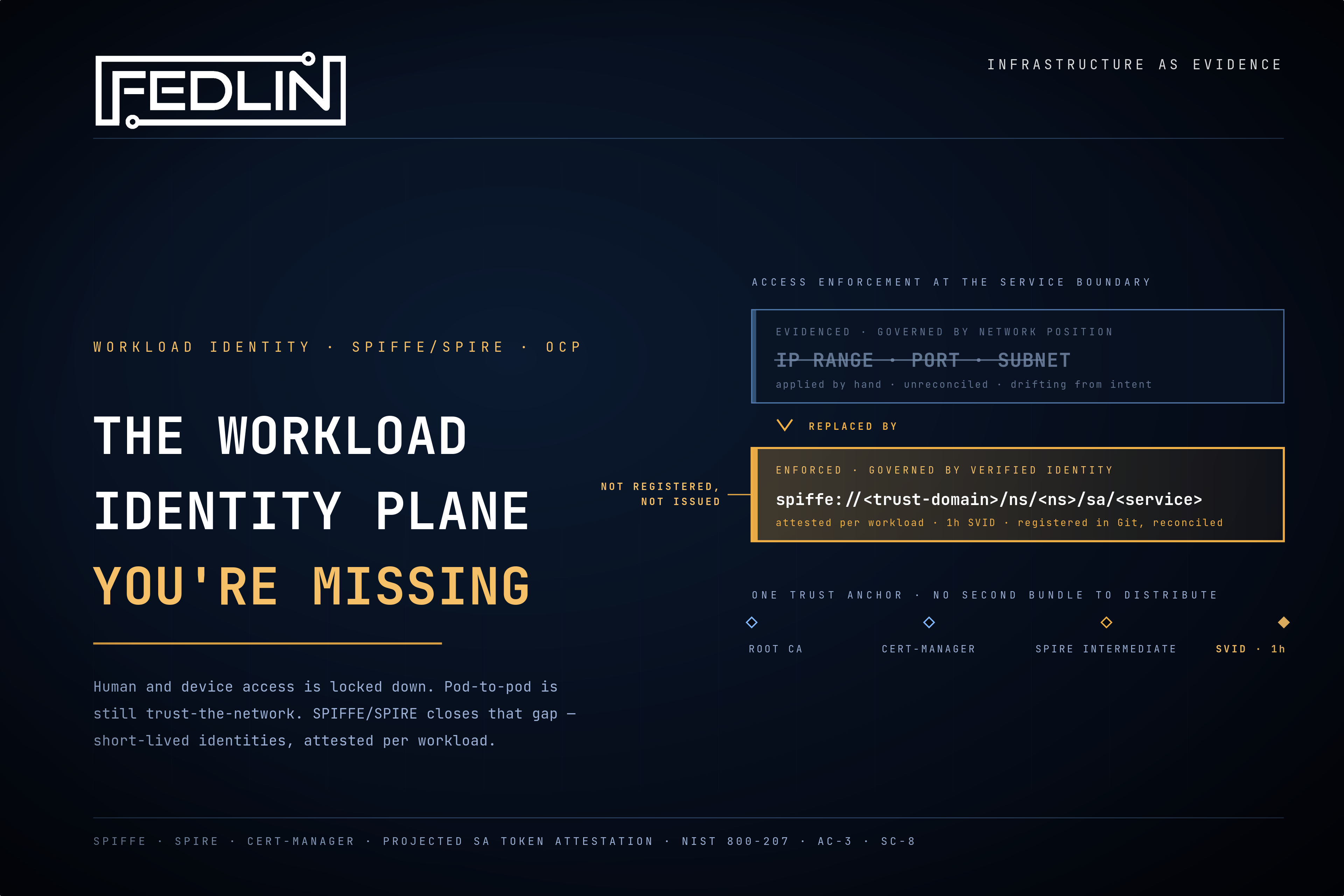
SPIFFE/SPIRE on OpenShift: Building the Workload Identity Plane Your Zero-Trust Model Is Missing
After locking down human and device access, pod-to-pod communication was still trust-the-network. SPIFFE/SPIRE closes that gap. Short-lived cryptographic identities, attested per-workload, chained under your existing Root CA.
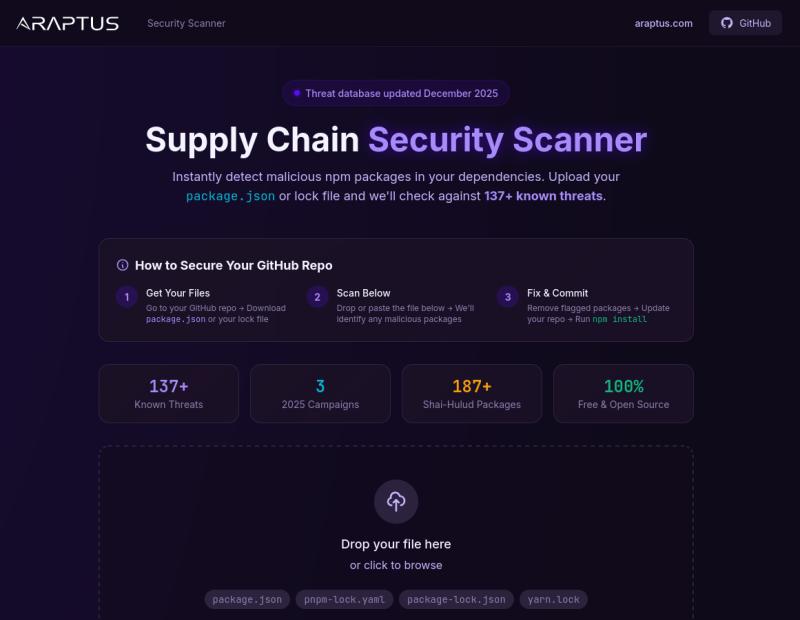
How Araptus' PNPM Security Scanner Caught Malware in My Dependencies
Self-hosting Araptus' PNPM Supply Chain Security Scanner led to discovering protest-ware hiding in transitive dependencies—before it reached production.

Your Security Headers Are Probably Failing. Here's How to Check (Free).
Why your security baseline stops enterprise deals—and how to fix it.
Managed web presence
Want your whole web presence run for you?
Get found · Capture leads · Stay secure
Managed Web Services
Delivered as Continuit Web: a managed web-presence service that keeps search and AI visibility, lead capture, and the security and trust layer handled on an ongoing basis, with monthly reporting. The edge controls on this page are the security layer inside it.
What do you need hardened?
Pick the area: we'll scope the engagement from there.